



In the Early 2000s, General Electric, an American Multinational conglomerate, experienced a crunching profit decline and stagnant stock prices. The company had to devise a performance review process that evaluated employees’ ability to drive growth. It was then that they had a turn in fortune. A more refined model of the General Electric analysis system has become commonplace and is now known as the 360-degree performance review.
360-degree performance reviews cannot be overstated for a company’s growth. If your workplace has low in-house morale or if employee development has hit a plateau, do a 360-degree performance review.
However, what really is a 360-degree performance review?
Performance review is a feedback technique to evaluate a company’s leader-employee relationship. If you’re an HR manager looking to boost your company’s overall output and workplace satisfaction, then this text will work for you.
What is a 360-degree Performance Review
360-degree feedback is a comprehensive assessment of employees’ performance for a holistic representation of a company’s strengths and weaknesses. It is called “360″ because it is a review from several parties in a company: managers, team members, and even customers.
The reason for leveraging feedback from many sources is simple – to gather well-rounded information about the blind spots in employees’ growth.
A 360-degree review is a helpful feedback tool for individual contributors and leaders alike. As Lynda Silsbee wrote in her article for Forbes, “Imagine a panoramic view of leadership insights — that’s what a 360-degree leadership survey offers. It’s like taking a comprehensive X-ray of a leader’s impact from all angles.
Performance review from an employee perspective is to report on the company’s leadership capacity, which is tradition. How about from a leader’s perspective? A performance review helps the leader make better-informed decisions.
Why are Performance Reviews Important
Here is why performance reviews are important for companies:
Better Decision-Making Abilities
A major reason for taking performance reviews is to improve a company’s decision-making process. Employee performance reviews help managers engage in meaningful discussions about their decision-making processes and outcomes. Giving helpful feedback and reviews helps employees improve their thinking and make better decisions. This leads to smarter choices across the entire company.
Drive Organizational Alignment
Another critical aspect of performance review is organizational alignment. During the performance review, you, as an HR person, must outline the company’s visions and tailor your questions. It is with the responses received that you evaluate your KPIs. This alignment helps to steer the organization toward its desired outcomes.
Strengthen Communication
Performance reviews offer a well-structured platform for managers and employees to engage in transparent dialogue. Both parties address obstacles, achievements, and future objectives; only then can the managers enhance cooperation across all teams and departments. Increased level of communication not only boosts teamwork but also strengthens overall organizational performance.
Remain Top Talent
One uncommon benefit of performance reviews is retaining top talent. Since employees contribute their achievements and contributions to the company, HR appreciates them and boasts their morale. Regular feedback and appreciation show the company’s interest in the employee’s commitment and call for more.
For Compensation and Rewards
With performance reviews, companies can tailor rewards to individual contributions. That way, a system for fairness and equal contributions of efforts is maintained to keep the company running.
Top Performance Questions You Should Ask
Here are some top questions to ask to engage your talents and improve their performances.

What are the Accomplishments from this Quarter You’re Most Proud Of?
This question allows employees to highlight the company’s achievements and share their perspectives. The employees also provide insights into what motivates them to achieve more.
For example, as employees tell you their perspectives about innovative software solutions, they may give insights into improved system performance.
How Do You Like to Receive Feedback and Recognition for Your Work?
Knowing how an employee likes to receive feedback and recognition helps HR know how to structure inquiries and pass messages more effectively.
For example, employees may appreciate specific feedback on their technical achievements, such as code reviews or recognition for solving complex technical problems.
Understanding employee-preferred feedback mechanisms gives insight into their preferences. This is a tool a company may consider using to promote technical excellence.
Which Goals Did you Achieve, and Which Did you Fall Short On?
This question is more about the employee than the employer because it calls for professional reflection. When employees think about their personal achievements for the company, they tend to achieve more. Better still, they learn from their shortcomings, improve on them, and produce results.
How Can I Enhance Your Job Satisfaction and Make it More Enjoyable?
This question shows you care about your employees’ happiness and want them to have a positive work experience, especially in technical jobs.
To increase employee satisfaction, it’s essential that you, as a company, focus on what makes your employees happy at work. This might mean giving them access to the latest tools and technologies, offering professional growth opportunities, and creating a team environment where they can share knowledge and work together.
In What Ways Can I Support You Better in Accomplishing Your Goals?
The question aims to help managers know where they’re lagging. Moreover, it helps them create a better workspace for better performance in the company. Sometimes, it may involve increased access to specialized tools and technologies, organizing training programs, or facilitating collaborations with subject matter experts. The end goal is to provide support for goal achievement.
How Well Do You Manage Multiple Projects?
This question focuses on gauging employee’s time management and productivity skills. It helps you assess the employee’s organizational and prioritization skills.
This question also helps the company uncover the need for project management among employees. Overall, the question helps the company know the best ways to help employees and which employees need the most attention.
What are Your Strengths, and How Have You Used Them for the Company?
Asking these questions helps employees reflect on their contributions to the organization. It also helps managers understand how employees’ strengths align with company goals and objectives.
Managers can better understand their team members’ strengths by asking this question. This helps in using those strengths to drive company success and boosts employee confidence and engagement.
Other 13 Questions you can Ask in your Review
- What is the most significant risk that you have taken, and what was the outcome?
- How do you handle ambiguity and uncertain situations?
- What is your approach to experimentation and learning from failures?
- How do you prioritize and balance competing demands and priorities?
- What is your level of self-awareness, and how do you recognize your own strengths and weaknesses?
- How effective are you in building and maintaining external relationships and partnerships?
- What is your workplace approach to diversity, equity, and inclusion?
- How do you handle and resolve conflicts with colleagues or stakeholders?
- What is your level of creativity and innovation in your works?
- How do you prioritize and support the growth and development of your team members?
- What is your approach to data-driven decision-making and analytics?
- How effectively can you communicate complex ideas and technical information to non-technical stakeholders?
- What is your level of accountability and ownership for your work and outcomes?
How To Craft the Best Performance Questions
The goal of crafting performance questions is to monitor employees’ successes. More importantly, it is to gain insight into employees’ challenges and strengths and determine if there is an area for improvement.
The rule of thumb is that good performance review questions should have clear intentions. Hence, you should have your intent and objectives before rolling out your questions. To help you as an HR, you can outline the company’s objectives or areas of improvement and then roll out your questions in that light.
Avoid confrontational questions like “What’s going wrong with your project timeline?” in performance reviews, as they may seem vindictive and send the wrong message. Always roll out your questions in the most decent way possible to properly assess your employees and not activate their defense system.
To begin, categorize your questions into overall performance, company insights, future outlook, and areas for improvement. You can start by using Bayzat, the number one HR solution in the UAE.
Bayzat and 360-degree Performance Reviews
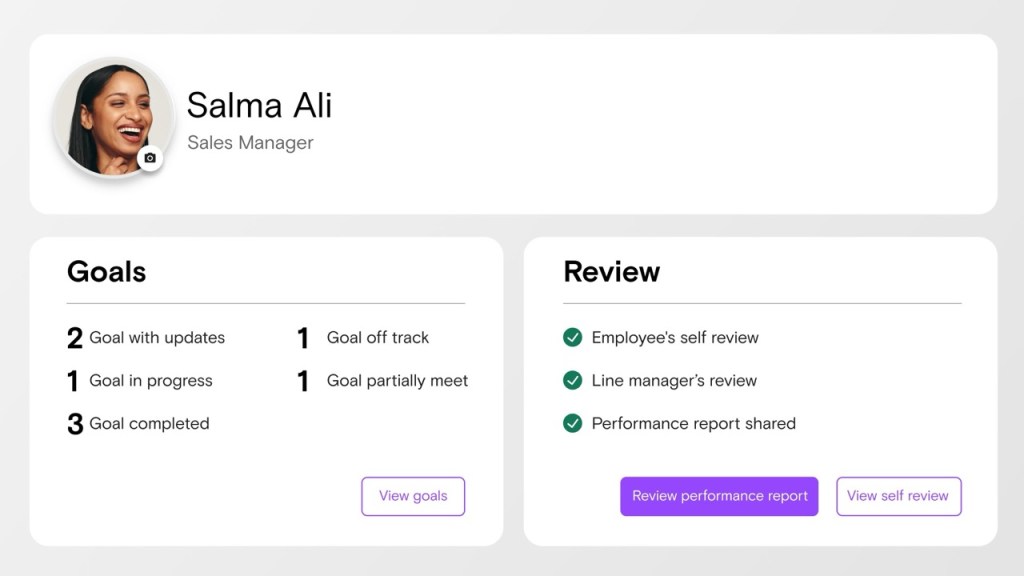
Performing comprehensive 360-degree performance reviews is one of the best ways to get the best from your talents and serve your target market better. However, how do you set up the right questions and get those much-needed feedback? This is where you need a professional HIR firm to help execute the process efficiently and effectively.
Bayzat is a top UAE HR solutions provider that understands the details that make a 360-degree performance review perfect. The firm knows how and where to compile the right data to help create the best performance questions your organisation needs. Why not place a call or chat with them to get an affordable quote that drives results?
Frequently Asked Questions
How Can a Company Ensure Personal Biases and Stereotypes Do Not Influence 360-degree Feedback?
Organizations can anonymously receive feedback after defining the review’s objectives to minimize personal bias in 360-degree feedback. They can also use data analysis to point out areas where the questions will be asked and ensure that the question reviews reach every stratum.
What Strategies Can a Company Employ to Address Inconsistent or Contradictory Feedback From Different Evaluators?
When faced with inconsistent feedback, the next call of action is to appoint a rural facilitator to bridge the gap. The facilitator looks for common themes and patterns and then reconciles them to help the organization with consistent feedback. The company may also consider using multiple sources to validate feedback and identify areas of agreement.
How Can 360-degree Performance Reviews Be Adapted for Remote or Distributed Teams?
The organization can use digital tools for feedback collection and reporting if a company wants to adopt 360-degree performance reviews for remote or distributed teams. An example is using Bayzat and video conferencing tools for virtual feedback evaluation. There’s also the option of online surveys.
What Ethical Considerations Should be Taken into Account When Implementing 360-degree Performance Reviews?
Organizations should consider confidentiality and transparency because they protect employee privacy and clearly reveal employee’s expectations. Fairness is another ethical consideration because it creates a healthy environment that is free of discrimination.
How Can Organizations Measure the ROI of 360-degree Performance Reviews?
A good way to measure a company’s ROI is to check its impact on employee turnover and retention rates. You should also track productivity, revenue growth, and customer satisfaction. Finally, evaluate the effectiveness of the leadership development programs.
What Role Does AI Play in Enhancing the Efficient 360-degree Performance Reviews?
AI plays a role by analyzing feedback patterns, identifying blind spots, and providing personalized data development to suggest targeted development opportunities. It also helps to improve natural feedback quality by using natural language processing.

In the Early 2000s, General Electric, an American Multinational conglomerate, experienced a crunching profit decline and stagnant stock prices. The company had to devise a performance review process that evaluated employees’ ability to drive growth. It was then that they had a turn in fortune. A more refined model of the General Electric analysis system has become commonplace and is now known as the 360-degree performance review.
360-degree performance reviews cannot be overstated for a company’s growth. If your workplace has low in-house morale or if employee development has hit a plateau, do a 360-degree performance review.
However, what really is a 360-degree performance review?
Performance review is a feedback technique to evaluate a company’s leader-employee relationship. If you’re an HR manager looking to boost your company’s overall output and workplace satisfaction, then this text will work for you.
What is a 360-degree Performance Review
360-degree feedback is a comprehensive assessment of employees’ performance for a holistic representation of a company’s strengths and weaknesses. It is called “360″ because it is a review from several parties in a company: managers, team members, and even customers.
The reason for leveraging feedback from many sources is simple – to gather well-rounded information about the blind spots in employees’ growth.
A 360-degree review is a helpful feedback tool for individual contributors and leaders alike. As Lynda Silsbee wrote in her article for Forbes, “Imagine a panoramic view of leadership insights — that’s what a 360-degree leadership survey offers. It’s like taking a comprehensive X-ray of a leader’s impact from all angles.
Performance review from an employee perspective is to report on the company’s leadership capacity, which is tradition. How about from a leader’s perspective? A performance review helps the leader make better-informed decisions.
Why are Performance Reviews Important
Here is why performance reviews are important for companies:
Better Decision-Making Abilities
A major reason for taking performance reviews is to improve a company’s decision-making process. Employee performance reviews help managers engage in meaningful discussions about their decision-making processes and outcomes. Giving helpful feedback and reviews helps employees improve their thinking and make better decisions. This leads to smarter choices across the entire company.
Drive Organizational Alignment
Another critical aspect of performance review is organizational alignment. During the performance review, you, as an HR person, must outline the company’s visions and tailor your questions. It is with the responses received that you evaluate your KPIs. This alignment helps to steer the organization toward its desired outcomes.
Strengthen Communication
Performance reviews offer a well-structured platform for managers and employees to engage in transparent dialogue. Both parties address obstacles, achievements, and future objectives; only then can the managers enhance cooperation across all teams and departments. Increased level of communication not only boosts teamwork but also strengthens overall organizational performance.
Remain Top Talent
One uncommon benefit of performance reviews is retaining top talent. Since employees contribute their achievements and contributions to the company, HR appreciates them and boasts their morale. Regular feedback and appreciation show the company’s interest in the employee’s commitment and call for more.
For Compensation and Rewards
With performance reviews, companies can tailor rewards to individual contributions. That way, a system for fairness and equal contributions of efforts is maintained to keep the company running.
Top Performance Questions You Should Ask
Here are some top questions to ask to engage your talents and improve their performances.
What are the Accomplishments from this Quarter You’re Most Proud Of?
This question allows employees to highlight the company’s achievements and share their perspectives. The employees also provide insights into what motivates them to achieve more.
For example, as employees tell you their perspectives about innovative software solutions, they may give insights into improved system performance.
How Do You Like to Receive Feedback and Recognition for Your Work?
Knowing how an employee likes to receive feedback and recognition helps HR know how to structure inquiries and pass messages more effectively.
For example, employees may appreciate specific feedback on their technical achievements, such as code reviews or recognition for solving complex technical problems.
Understanding employee-preferred feedback mechanisms gives insight into their preferences. This is a tool a company may consider using to promote technical excellence.
Which Goals Did you Achieve, and Which Did you Fall Short On?
This question is more about the employee than the employer because it calls for professional reflection. When employees think about their personal achievements for the company, they tend to achieve more. Better still, they learn from their shortcomings, improve on them, and produce results.
How Can I Enhance Your Job Satisfaction and Make it More Enjoyable?
This question shows you care about your employees’ happiness and want them to have a positive work experience, especially in technical jobs.
To increase employee satisfaction, it’s essential that you, as a company, focus on what makes your employees happy at work. This might mean giving them access to the latest tools and technologies, offering professional growth opportunities, and creating a team environment where they can share knowledge and work together.
In What Ways Can I Support You Better in Accomplishing Your Goals?
The question aims to help managers know where they’re lagging. Moreover, it helps them create a better workspace for better performance in the company. Sometimes, it may involve increased access to specialized tools and technologies, organizing training programs, or facilitating collaborations with subject matter experts. The end goal is to provide support for goal achievement.
How Well Do You Manage Multiple Projects?
This question focuses on gauging employee’s time management and productivity skills. It helps you assess the employee’s organizational and prioritization skills.
This question also helps the company uncover the need for project management among employees. Overall, the question helps the company know the best ways to help employees and which employees need the most attention.
What are Your Strengths, and How Have You Used Them for the Company?
Asking these questions helps employees reflect on their contributions to the organization. It also helps managers understand how employees’ strengths align with company goals and objectives.
Managers can better understand their team members’ strengths by asking this question. This helps in using those strengths to drive company success and boosts employee confidence and engagement.
Other 13 Questions you can Ask in your Review
- What is the most significant risk that you have taken, and what was the outcome?
- How do you handle ambiguity and uncertain situations?
- What is your approach to experimentation and learning from failures?
- How do you prioritize and balance competing demands and priorities?
- What is your level of self-awareness, and how do you recognize your own strengths and weaknesses?
- How effective are you in building and maintaining external relationships and partnerships?
- What is your workplace approach to diversity, equity, and inclusion?
- How do you handle and resolve conflicts with colleagues or stakeholders?
- What is your level of creativity and innovation in your works?
- How do you prioritize and support the growth and development of your team members?
- What is your approach to data-driven decision-making and analytics?
- How effectively can you communicate complex ideas and technical information to non-technical stakeholders?
- What is your level of accountability and ownership for your work and outcomes?
How To Craft the Best Performance Questions
The goal of crafting performance questions is to monitor employees’ successes. More importantly, it is to gain insight into employees’ challenges and strengths and determine if there is an area for improvement.
The rule of thumb is that good performance review questions should have clear intentions. Hence, you should have your intent and objectives before rolling out your questions. To help you as an HR, you can outline the company’s objectives or areas of improvement and then roll out your questions in that light.
Avoid confrontational questions like “What’s going wrong with your project timeline?” in performance reviews, as they may seem vindictive and send the wrong message. Always roll out your questions in the most decent way possible to properly assess your employees and not activate their defense system.
To begin, categorize your questions into overall performance, company insights, future outlook, and areas for improvement. You can start by using Bayzat, the number one HR solution in the UAE.
Bayzat and 360-degree Performance Reviews
Performing comprehensive 360-degree performance reviews is one of the best ways to get the best from your talents and serve your target market better. However, how do you set up the right questions and get those much-needed feedback? This is where you need a professional HIR firm to help execute the process efficiently and effectively.
Bayzat is a top UAE HR solutions provider that understands the details that make a 360-degree performance review perfect. The firm knows how and where to compile the right data to help create the best performance questions your organisation needs. Why not place a call or chat with them to get an affordable quote that drives results?
Frequently Asked Questions
How Can a Company Ensure Personal Biases and Stereotypes Do Not Influence 360-degree Feedback?
Organizations can anonymously receive feedback after defining the review’s objectives to minimize personal bias in 360-degree feedback. They can also use data analysis to point out areas where the questions will be asked and ensure that the question reviews reach every stratum.
What Strategies Can a Company Employ to Address Inconsistent or Contradictory Feedback From Different Evaluators?
When faced with inconsistent feedback, the next call of action is to appoint a rural facilitator to bridge the gap. The facilitator looks for common themes and patterns and then reconciles them to help the organization with consistent feedback. The company may also consider using multiple sources to validate feedback and identify areas of agreement.
How Can 360-degree Performance Reviews Be Adapted for Remote or Distributed Teams?
The organization can use digital tools for feedback collection and reporting if a company wants to adopt 360-degree performance reviews for remote or distributed teams. An example is using Bayzat and video conferencing tools for virtual feedback evaluation. There’s also the option of online surveys.
What Ethical Considerations Should be Taken into Account When Implementing 360-degree Performance Reviews?
Organizations should consider confidentiality and transparency because they protect employee privacy and clearly reveal employee’s expectations. Fairness is another ethical consideration because it creates a healthy environment that is free of discrimination.
How Can Organizations Measure the ROI of 360-degree Performance Reviews?
A good way to measure a company’s ROI is to check its impact on employee turnover and retention rates. You should also track productivity, revenue growth, and customer satisfaction. Finally, evaluate the effectiveness of the leadership development programs.
What Role Does AI Play in Enhancing the Efficient 360-degree Performance Reviews?
AI plays a role by analyzing feedback patterns, identifying blind spots, and providing personalized data development to suggest targeted development opportunities. It also helps to improve natural feedback quality by using natural language processing.

Team Bayzat
A team of experts in HR and technology, working passionately to develop innovative solutions that help companies manage their employees efficiently.
Related Articles
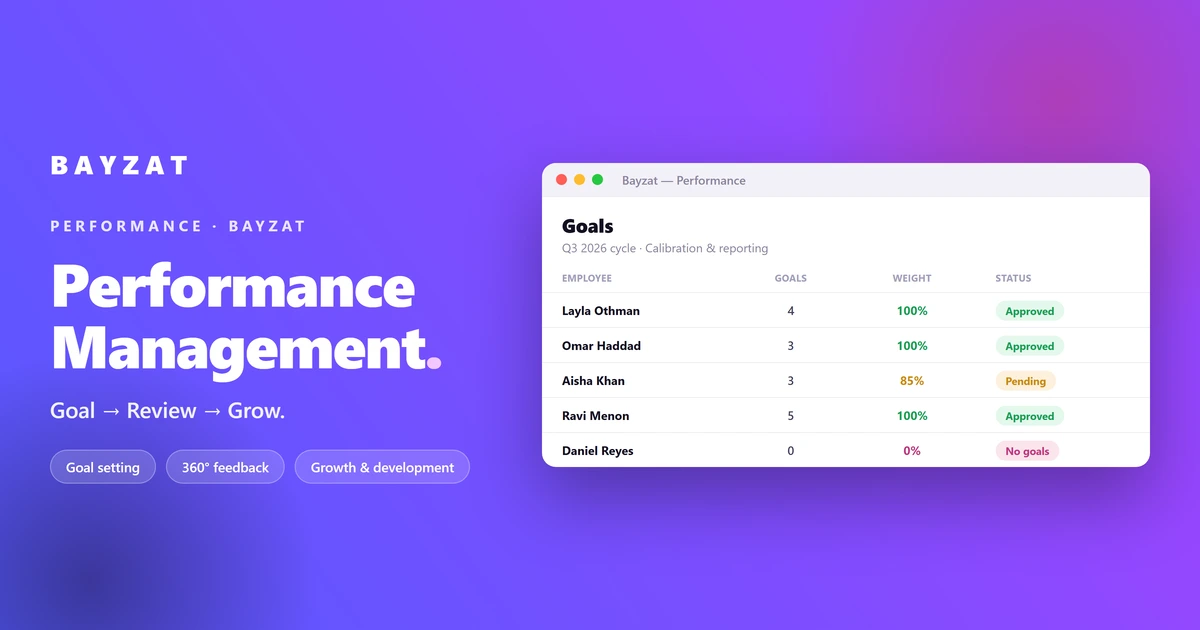
Performance in the GCC is not a once-a-year form. In a market this fast — where teams are young, ambitious and mobile, and careers move quickly — the companies that […]

The annual performance appraisal process is one activity in organizations that HR managers and employees alike dread. Although it’s intended to bring out the best in people, unfortunately, more often […]






Get Social