



Accounts Payable is the process of tracking, managing, and paying vendor invoices. Every business, big or small, has to deal with Accounts Payable (AP) but if done manually, AP can become a time-consuming, error-prone task that slows down financial operations.
This is where Accounts Payable Automation Software comes in. By leveraging smart technology, companies can streamline invoice management, reduce processing costs, and eliminate costly errors.
The Accounts Payable Process
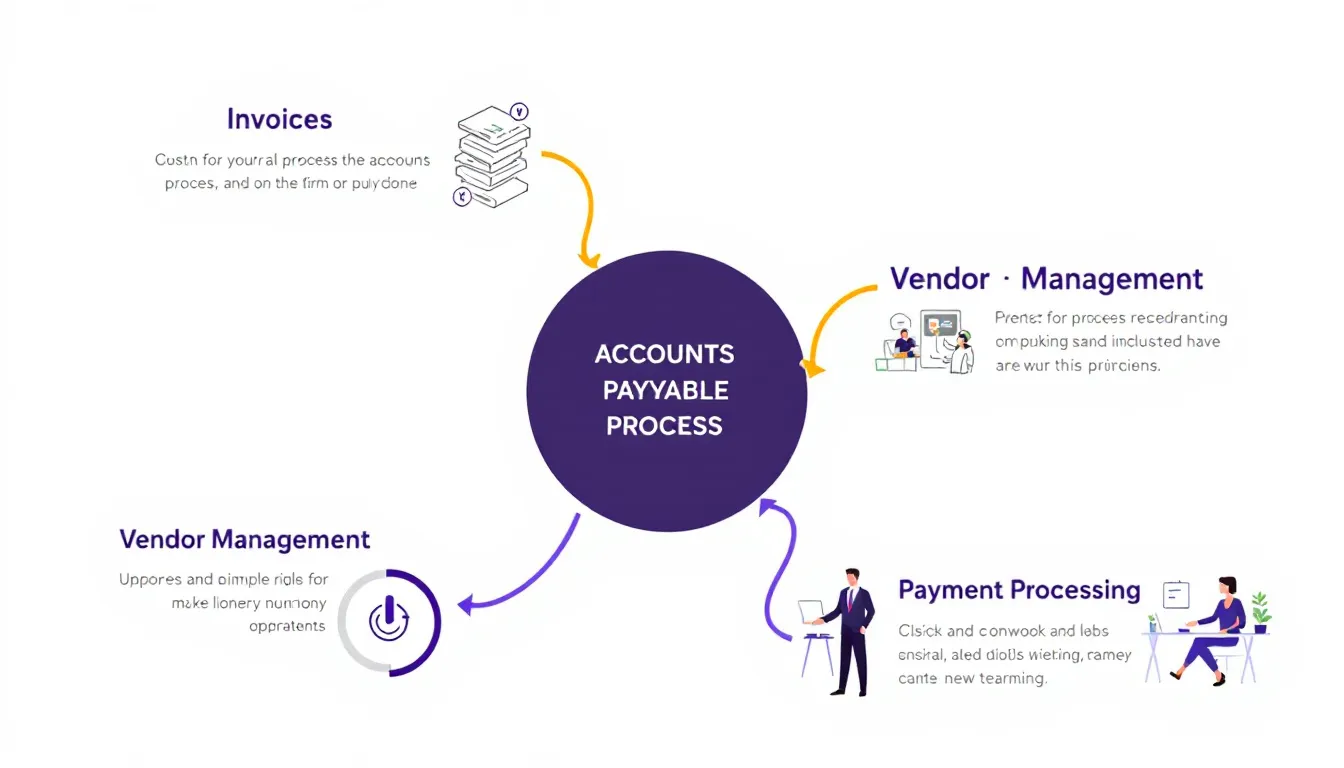
The accounts payable process is a way for a business to handle its bills. It makes sure the company pays the money it owes to its suppliers and creditors. There are four simple steps in this process:
A standard AP process includes:
- Invoice receipt: Collecting invoices from suppliers, whether they come in on paper, via email, or digitally.
- Invoice validation: Checking each invoice by matching it with purchase orders and contracts to make sure everything is accurate.
- Approval workflows: Sending invoices to the appropriate managers for approval before payment is made.
- Payment processing: Scheduling and executing payments to vendors once invoices are approved.
- Reconciliation & reporting: Reviewing and updating financial records to ensure everything is correct and up to date.
Accounts Payable Job Description
The Accounts Payable role is responsible for managing a company’s outgoing payments by processing invoices, verifying their accuracy, and ensuring timely payments. It involves maintaining clear records, reconciling accounts, and resolving discrepancies with vendors. Additionally, professionals in this role support month-end closings and audits by ensuring all payment details are accurate and up-to-date.
Responsibilities of Accounts Payable Clerk
- Invoice Processing: Check incoming invoices.
- Payment Scheduling: Set up payment dates.
- Record Keeping: Update financial records.
- Reconciliation: Match vendor and company data.
- Vendor Communication: Address billing issues.
- Support Tasks: Help with audits and closings.
AP automation significantly reduces manual tasks typically handled by clerks by automating data entry, invoice matching, and payment scheduling. This automation minimizes human error, leading to more accurate records and faster processing. In addition, it enhances audit readiness, improves vendor relationships through timely payments, and frees clerks to focus on more strategic, high-value tasks.
What is AP Automation
AP automation means digitally managing bill payments instead of doing it manually. It helps companies process and pay invoices faster.
Benefits of Using AP Automation Software
- Faster invoice processing and payments: AP automation software speeds up bill processing and payment approval, ensuring money flows smoothly and on time.
- Fewer manual mistakes and saved time: It cuts down on human errors by automating data entry, freeing up staff to focus on more valuable tasks.
- Better financial tracking and control: The software provides clear, up-to-date records of every transaction, making budget monitoring and expense management easier.
- Improved vendor relationships: By ensuring prompt, accurate payments and clear communication, it builds trust and strengthens partnerships with suppliers.
- Easier audits and better compliance: Organized digital records simplify the audit process and help maintain adherence to financial rules and regulations.
- Integration with ERP & Accounting Software: Seamless synchronization between AP and financial reporting systems
Accounts Payable Vs Accounts Receivable
Accounts Payable represents the money a company owes to its suppliers for goods and services, while Accounts Receivable is the money that customers owe to the company for items sold. In simple terms, AP deals with what you need to pay out, and AR focuses on what you will collect. Balancing both is essential for maintaining a healthy cash flow and smooth business operations.
How Bayzat Automates Accounts Payable for Businesses
Bayzat AP software is the best accounts payable software in UAE. While traditional AP methods are inefficient, Bayzat Finance provides a smart, automated Accounts Payable softwre solution designed to eliminate inefficiencies and improve financial workflows.
Key Features of Bayzat’s AP Automation:
🔹 Seamless Invoice Management
- Capture and process invoices automatically—no manual data entry required
- Customizable approval workflows to fit your company’s structure
- Reduce invoice processing time by up to 70%
🔹 Optimized Payments & Cost Savings
- Flat transaction fees for domestic and international payments
- Up to 2.5% better FX rates than traditional banks
- Payments in 30+ currencies with real-time tracking
🔹 Smart Vendor & Cash Flow Management
- Real-time reporting for full cash flow visibility
- Automated remittance advice ensures vendors are always informed
- Secure payment processing with Multi-Factor Authentication (MFA)

Accounts Payable is the process of tracking, managing, and paying vendor invoices. Every business, big or small, has to deal with Accounts Payable (AP) but if done manually, AP can become a time-consuming, error-prone task that slows down financial operations.
This is where Accounts Payable Automation Software comes in. By leveraging smart technology, companies can streamline invoice management, reduce processing costs, and eliminate costly errors.
The Accounts Payable Process
The accounts payable process is a way for a business to handle its bills. It makes sure the company pays the money it owes to its suppliers and creditors. There are four simple steps in this process:
A standard AP process includes:
- Invoice receipt: Collecting invoices from suppliers, whether they come in on paper, via email, or digitally.
- Invoice validation: Checking each invoice by matching it with purchase orders and contracts to make sure everything is accurate.
- Approval workflows: Sending invoices to the appropriate managers for approval before payment is made.
- Payment processing: Scheduling and executing payments to vendors once invoices are approved.
- Reconciliation & reporting: Reviewing and updating financial records to ensure everything is correct and up to date.
Accounts Payable Job Description
The Accounts Payable role is responsible for managing a company’s outgoing payments by processing invoices, verifying their accuracy, and ensuring timely payments. It involves maintaining clear records, reconciling accounts, and resolving discrepancies with vendors. Additionally, professionals in this role support month-end closings and audits by ensuring all payment details are accurate and up-to-date.
Responsibilities of Accounts Payable Clerk
- Invoice Processing: Check incoming invoices.
- Payment Scheduling: Set up payment dates.
- Record Keeping: Update financial records.
- Reconciliation: Match vendor and company data.
- Vendor Communication: Address billing issues.
- Support Tasks: Help with audits and closings.
AP automation significantly reduces manual tasks typically handled by clerks by automating data entry, invoice matching, and payment scheduling. This automation minimizes human error, leading to more accurate records and faster processing. In addition, it enhances audit readiness, improves vendor relationships through timely payments, and frees clerks to focus on more strategic, high-value tasks.
What is AP Automation
AP automation means digitally managing bill payments instead of doing it manually. It helps companies process and pay invoices faster.
Benefits of Using AP Automation Software
- Faster invoice processing and payments: AP automation software speeds up bill processing and payment approval, ensuring money flows smoothly and on time.
- Fewer manual mistakes and saved time: It cuts down on human errors by automating data entry, freeing up staff to focus on more valuable tasks.
- Better financial tracking and control: The software provides clear, up-to-date records of every transaction, making budget monitoring and expense management easier.
- Improved vendor relationships: By ensuring prompt, accurate payments and clear communication, it builds trust and strengthens partnerships with suppliers.
- Easier audits and better compliance: Organized digital records simplify the audit process and help maintain adherence to financial rules and regulations.
- Integration with ERP & Accounting Software: Seamless synchronization between AP and financial reporting systems
Accounts Payable Vs Accounts Receivable
Accounts Payable represents the money a company owes to its suppliers for goods and services, while Accounts Receivable is the money that customers owe to the company for items sold. In simple terms, AP deals with what you need to pay out, and AR focuses on what you will collect. Balancing both is essential for maintaining a healthy cash flow and smooth business operations.
How Bayzat Automates Accounts Payable for Businesses
Bayzat AP software is the best accounts payable software in UAE. While traditional AP methods are inefficient, Bayzat Finance provides a smart, automated Accounts Payable softwre solution designed to eliminate inefficiencies and improve financial workflows.
Key Features of Bayzat’s AP Automation:
🔹 Seamless Invoice Management
- Capture and process invoices automatically—no manual data entry required
- Customizable approval workflows to fit your company’s structure
- Reduce invoice processing time by up to 70%
🔹 Optimized Payments & Cost Savings
- Flat transaction fees for domestic and international payments
- Up to 2.5% better FX rates than traditional banks
- Payments in 30+ currencies with real-time tracking
🔹 Smart Vendor & Cash Flow Management
- Real-time reporting for full cash flow visibility
- Automated remittance advice ensures vendors are always informed
- Secure payment processing with Multi-Factor Authentication (MFA)

Noor Gharib
Related Articles
Choosing the right HR software has become a critical decision for businesses in Saudi Arabia and the Middle East. As companies scale, expand across locations, and navigate local labor regulations, […]

Need an efficient way to handle employee onboarding process? Our onboarding and offboarding checklist offers clear steps for smooth integration of new hires and professional exits. Discover best practices in […]






Get Social